
 HOME >
- Child Development >
- When Do Babies Start Laughing?...
Introduction
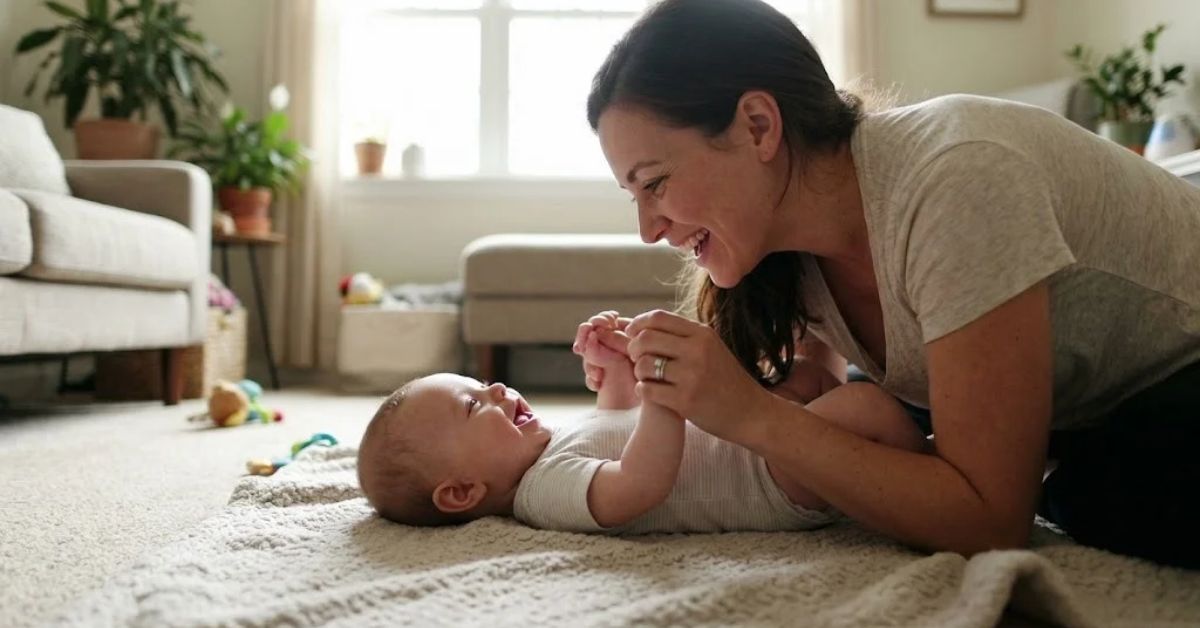
Few sounds are as universally delightful as a baby’s laugh. That first giggle is a milestone that parents anticipate, celebrate and try to recreate countless times. But when do babies start laughing and what does this milestone actually mean for your child’s development?
Baby laughter is more than just an adorable moment — it is a significant developmental milestone that reflects your baby’s growing social awareness, cognitive processing and emotional bonding. Understanding when and why babies laugh helps parents appreciate this milestone in context and know when to discuss any concerns with their pediatrician.
Most babies produce their first laugh between three and four months of age, though the exact timing varies from child to child. Before that first laugh, your baby goes through several stages of social and emotional development — from reflexive newborn smiles to intentional social smiles to the first real chuckle.
Social-Emotional Milestones Timeline
| Age | Milestone | What to Expect |
| 6-8 Weeks | Social smile | Smiles in response to your face |
| 3-4 Months | First laugh | Laughs at peek-a-boo and funny sounds |
| 6 Months | Belly laughs | Laughs at physical play and surprise |
| 9 Months | Humor awareness | Laughs at unexpected actions |
| 12 Months | Intentional humor | Does things to make others laugh |
The Timeline of Baby Laughter
Newborn Smiles (Birth to 6 Weeks)
In the first weeks of life, you may notice your newborn smiling, particularly during sleep. These early smiles are reflexive — involuntary muscle movements that are not yet connected to social interaction or emotion. Reflexive smiles typically appear during REM sleep and are controlled by the brainstem rather than the emotional centers of the brain.
While reflexive smiles are not intentional, they give parents an early glimpse of the social expressions that will develop over the coming weeks. Enjoy these fleeting smiles knowing that intentional, responsive smiles are just around the corner.
Social Smiles (6 to 8 Weeks)
The social smile is one of the first major social-emotional milestones. Around six to eight weeks of age, your baby begins smiling in direct response to your face, voice or interaction. This smile is intentional and represents your baby’s developing ability to recognize familiar people and respond to social engagement.
Social smiles are an important indicator of healthy brain development and early emotional bonding. When your baby smiles at you and you smile back, you are engaging in a “serve and return” interaction that strengthens neural connections and teaches your baby about communication and relationships.
Cooing and Vocal Play (2 to 3 Months)
Before babies laugh, they coo. Cooing involves soft, vowel-like sounds (“ooh,” “ahh”) that your baby makes during calm, alert periods. These sounds represent your baby’s earliest experiments with vocalization and often occur during face-to-face interactions with caregivers.
Cooing is a precursor to laughter. As your baby’s vocal cords strengthen and their social awareness increases, these soft sounds gradually evolve into the more expressive vocalizations that lead to the first laugh.
First Laughs (3 to 4 Months)
Most babies produce their first laugh between three and four months of age. This first laugh is often triggered by physical stimulation — a gentle tickle, a bouncing game or the surprised delight of peek-a-boo. The sound may be a brief chuckle rather than a full belly laugh and it may take your baby a few weeks to laugh regularly.
Research by developmental psychologist L. Alan Sroufe found that early baby laughter is primarily triggered by physical and tactile stimulation (tickling, bouncing, gentle tossing). As babies grow older — around five to six months — they begin laughing at visual and social stimuli (funny faces, unexpected events, incongruity between what they expect and what happens).
Regular Laughter (4 to 6 Months)
By four to six months, most babies laugh freely and frequently during play and social interaction. They laugh at peek-a-boo, funny sounds, exaggerated facial expressions and the surprising reappearance of a hidden toy. Laughter becomes a tool for social connection — your baby laughs to engage you, to extend play and to express joy.
At this stage, you will notice your baby has a developing sense of humor. They anticipate the punchline of peek-a-boo before you reveal your face. They laugh harder at repetition of favorite games. They may even try to make you laugh by repeating sounds or actions that got a reaction from you.
Laughter and Humor Development (6 to 12 Months)
Between six and 12 months, your baby’s laughter becomes more sophisticated. They laugh at increasingly complex situations — a parent wearing a silly hat, a toy that makes an unexpected sound or a sibling doing something funny. They begin to understand basic incongruity (something happening that does not match their expectations), which is the cognitive foundation of humor.
By their first birthday, many babies are actively trying to make others laugh. They may repeat a funny action, make deliberate silly sounds or play games designed to provoke laughter from caregivers and siblings. This represents sophisticated social cognition — they understand that their actions can influence others’ emotions.
Why Baby Laughter Matters for Development
Baby laughter is far more than entertainment. It is a window into your child’s cognitive, social and emotional development. Laughter signals that your baby is processing sensory information, recognizing patterns, understanding cause and effect and forming social bonds.
Cognitive Development
Laughter requires cognitive processing. Your baby needs to recognize a stimulus, compare it against their expectations, detect incongruity or surprise and then respond with laughter. This process engages multiple areas of the brain and reflects growing cognitive sophistication. As your baby’s laughter triggers evolve from physical stimulation to visual incongruity, they are demonstrating advancing intellectual capabilities.
Social-Emotional Development
Laughter is inherently social. Babies laugh most often during interactions with familiar caregivers, which reinforces bonding and attachment. When you laugh together with your baby, you are co-regulating emotions, strengthening trust and building the foundation for healthy social relationships throughout childhood.
Communication Development
Before babies have words, they communicate through sounds — and laughter is one of their most effective tools. A baby who laughs during play is communicating pleasure, engagement and the desire for continued interaction. This pre-verbal communication is a building block for language development.
How to Make Your Baby Laugh
Every baby has unique triggers for laughter, but certain activities are reliably effective across most babies. Here are proven ways to elicit those precious giggles.
Peek-a-Boo
Peek-a-boo is the classic baby laughter generator and for good reason. It combines surprise, anticipation and the reassuring reappearance of a familiar face. It also supports the development of object permanence — the understanding that things continue to exist even when hidden from view.
Funny Sounds and Voices
Exaggerated sounds, silly voices, animal noises and unexpected vocalizations often produce immediate laughter. Babies are especially responsive to sounds that are different from normal speech patterns — the contrast is what makes them funny to a developing brain.
Gentle Physical Play
Light tickling (feet, tummy, under the chin), gentle bouncing on your lap, airplane games and being lifted overhead are physical activities that typically trigger laughter in babies four months and older. Always be gentle and responsive to your baby’s cues — if they seem uncomfortable or overstimulated, pause and try again later.
Exaggerated Facial Expressions
Babies study faces closely and exaggerated expressions — wide eyes, an open mouth, a dramatic surprised look — are inherently funny to them because they contrast with normal facial expressions. Pair these with silly sounds for maximum effect.
Repetition and Anticipation
Babies love repetition. Repeat the game or sound that made them laugh and they will often laugh harder the second and third time. This is because they begin to anticipate the funny part and the anticipation itself becomes part of the enjoyment. The buildup-and-payoff structure of peek-a-boo and similar games taps directly into this.
Celebrating your baby’s milestones? Keep track with regular well-child visits at Zalam Pediatrics.
📞 Call (708) 599-8000What If My Baby Is Not Laughing Yet?
If your baby has not laughed by four months, it is usually not a cause for concern. Some babies are simply more reserved or serious in temperament and may laugh later than others. Premature babies may reach this milestone based on their adjusted age rather than their birth date.
However, if your baby is not laughing or showing social responsiveness by six months — meaning they do not smile at familiar faces, do not respond to playful interactions and show limited interest in social engagement — it is worth mentioning to your pediatrician. These can sometimes be early indicators of developmental differences that benefit from early assessment and support.
Keep in mind that the absence of laughter alone is not a diagnostic sign of any specific condition. Pediatricians look at the full picture of social, emotional, cognitive and motor development. If all other milestones are on track and your baby is socially engaged (making eye contact, smiling, cooing), a late laugh is likely just a variation of normal development.
If you have any concerns, trust your instincts and bring them up at your next well-child visit. Early discussion leads to early support when needed and most of the time, parents find reassurance that their baby is developing well.
Laughter and Your Baby’s Temperament
Not all babies are equally giggly and that is perfectly normal. Some babies laugh easily and often, while others are more observant and serious. Temperament — your baby’s natural disposition — plays a significant role in how and when they express emotions, including laughter.
Babies who are naturally cautious or slow to warm up may not laugh as readily in new situations or with unfamiliar people. They may reserve their biggest laughs for the comfort of home and familiar faces. This is not a developmental concern — it is a personality trait.
Understanding and respecting your baby’s temperament is important. Rather than trying to force laughter, follow your baby’s lead. Create warm, comfortable, low-pressure opportunities for play and let the laughter come naturally. A calm, responsive approach to parenting supports all babies, regardless of temperament.
Fun Facts About Baby Laughter
Research into baby laughter has revealed some fascinating insights. Babies laugh an average of 300 times per day — far more than adults, who average about 20 times. Babies laugh before they can talk, before they can walk and before they fully understand the concept of humor. Their laughter is driven by surprise, sensory pleasure and social connection rather than the abstract humor that makes adults laugh.
Studies have also shown that baby laughter has a distinctive acoustic quality that adults find universally appealing, regardless of culture. The sound of a baby’s laugh activates reward centers in adult brains, which reinforces caregiving behavior and strengthens the parent-child bond.
Interestingly, babies laugh more in the presence of other people than when alone. Even when a funny event occurs without a social partner present, babies are more likely to laugh when someone else is watching. This suggests that laughter is fundamentally social — a tool for connection rather than merely a response to humor.
Key Takeaways
✔ Most babies laugh for the first time between 3 and 4 months old
✔ Peek-a-boo and silly faces are reliable laugh triggers
✔ Laughter signals healthy social-emotional development
✔ Premature babies may reach this milestone on an adjusted timeline
✔ If your baby hasn’t laughed by 6 months mention it at the next visit
Ready to choose your baby’s pediatrician?
Visit Zalam Pediatrics Center at 9830 S. Ridgeland Ave., Suite 2, Chicago Ridge, IL 60415.
📞 Call (708) 599-8000 to Contact UsFrequently Asked Questions
At what age do babies start laughing?
Most babies produce their first laugh between three and four months of age. This is preceded by social smiling (six to eight weeks) and cooing (two to three months). By four to six months, most babies laugh regularly during play and social interaction.
What if my baby is not laughing yet?
If your baby is under four months and not laughing yet, this is typically normal — many babies have not yet reached this milestone. If your baby is over six months and shows no social responsiveness (no smiling, no eye contact, no cooing), discuss this with your pediatrician. If other milestones are on track, a late laugh is usually just a temperament variation.
How can I make my baby laugh?
Peek-a-boo, funny sounds, gentle tickling, exaggerated facial expressions and silly voices are reliable laugh triggers for most babies. Follow your baby’s cues and repeat activities that get a positive response. Every baby has unique humor preferences.
Is laughing a developmental milestone?
Yes. Baby laughter is recognized as a social-emotional milestone that reflects cognitive processing, social awareness and emotional bonding. The CDC includes social responsiveness and emotional expression in its developmental milestone guidelines.
What comes before laughing in baby development?
Before laughing, babies go through reflexive smiling (birth to six weeks), social smiling (six to eight weeks) and cooing (two to three months). Each stage builds the social and vocal foundations that lead to the first laugh.
Conclusion
Your baby’s first laugh is a joyful milestone that marks growing social awareness, cognitive development and emotional connection. While most babies start laughing between three and four months, the exact timing varies — and that variation is perfectly normal.
Enjoy this stage by engaging in plenty of face-to-face play, silly sounds and interactive games. These moments of shared laughter are not just fun — they are building the neural pathways that support healthy development and a strong parent-child bond.
If you have questions about your baby’s social or emotional development, your pediatrician is always available to provide guidance and reassurance.