
 HOME >
- Newborn & Infant Care >
- Baby Eczema: Causes, Symptoms,...
Introduction
Baby eczema, also known as infantile atopic dermatitis, is one of the most common skin conditions in infants and young children. It affects an estimated 10 to 20 percent of children worldwide, with most cases appearing in the first six months of life. The condition causes dry, itchy, inflamed patches of skin that can be distressing for both babies and their parents.
While baby eczema can be uncomfortable and sometimes persistent, it is highly manageable with proper care and treatment. Most children outgrow eczema by school age and understanding the condition helps parents take proactive steps to minimize flare-ups, protect their baby’s skin and know when to seek medical attention.
This comprehensive guide covers everything parents need to know about baby eczema — from identifying the first signs and understanding triggers to evidence-based treatment options and daily skin care routines that help prevent flare-ups.
Common Eczema Triggers and Solutions
| Trigger | How It Affects Skin | Solution |
| Dry Air | Strips moisture from skin | Use a cool-mist humidifier |
| Harsh Soaps | Irritates sensitive skin | Switch to fragrance-free products |
| Wool/Synthetic Fabrics | Causes friction and itching | Dress in soft cotton |
| Food Allergens | Can trigger flares in some babies | Discuss elimination diet with doctor |
| Heat and Sweat | Increases itching and redness | Keep rooms cool and dress in layers |
| Dust Mites | Triggers allergic response | Wash bedding weekly in hot water |
What Is Baby Eczema?
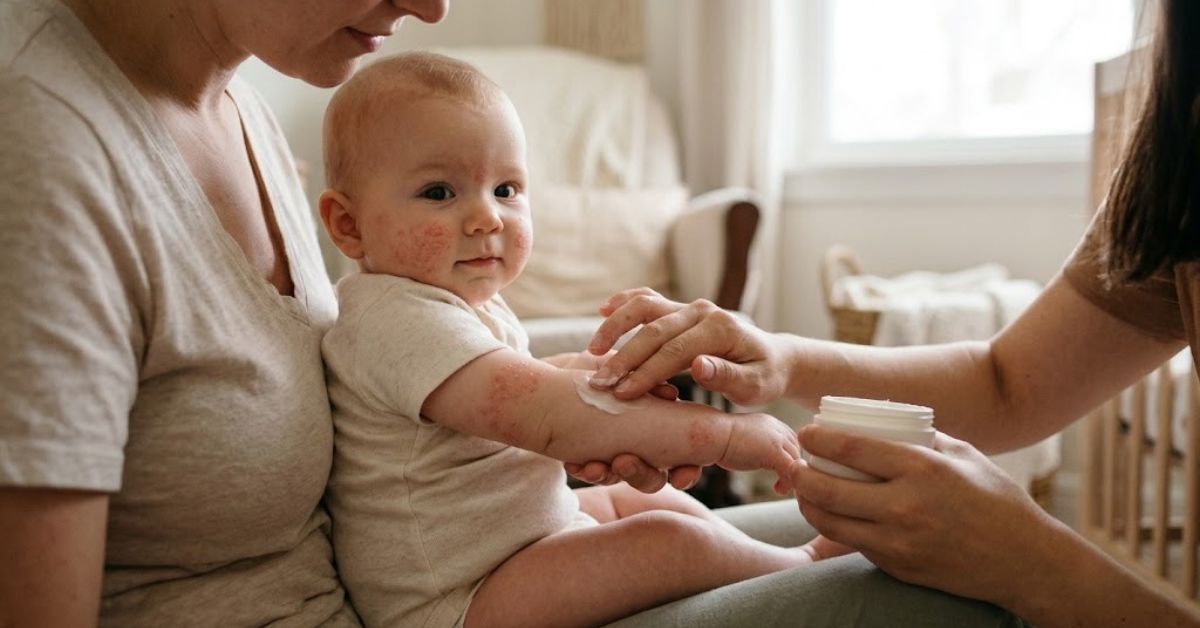
Eczema is a chronic inflammatory skin condition characterized by dry, itchy, red and sometimes weeping or crusting patches of skin. In babies, eczema most commonly appears on the face (especially the cheeks and chin), scalp, arms, legs and the creases of the elbows and knees.
Atopic dermatitis is the most common form of eczema and is part of the “atopic triad” — a group of related conditions that includes eczema, asthma and allergic rhinitis (hay fever). Children with eczema have a higher likelihood of developing asthma or allergies later in childhood, a progression known as the “atopic march.”
Eczema is not contagious. It cannot be spread from one child to another through touch or close contact. The condition results from a combination of genetic predisposition and environmental factors that affect the skin’s ability to retain moisture and protect against irritants.
Causes and Risk Factors
Baby eczema develops when the skin’s protective barrier is compromised, allowing moisture to escape and irritants to penetrate. Several factors contribute to this barrier dysfunction.
Genetics
Eczema has a strong genetic component. Children with one parent who has eczema, asthma or allergies have a significantly higher risk of developing the condition. If both parents have atopic conditions, the risk increases further. Research has identified mutations in the filaggrin gene, which plays a critical role in maintaining the skin barrier, as a major risk factor.
Immune System Response
In babies with eczema, the immune system overreacts to substances that are normally harmless — such as certain fabrics, soaps or environmental particles. This overreaction triggers inflammation that produces the characteristic redness, swelling and itching of eczema.
Environmental Triggers
Common triggers that can cause eczema flare-ups include dry air (especially during winter months), harsh soaps and detergents, fragranced products, rough or synthetic fabrics, pet dander, dust mites, pollen, extreme temperatures, sweating and saliva (drool) on the skin.
Food Sensitivities
While food allergies do not cause eczema, they can worsen it in some children. Common food triggers include cow’s milk, eggs, peanuts, wheat and soy. However, parents should not eliminate foods from their baby’s diet without guidance from a pediatrician, as unnecessary dietary restrictions can lead to nutritional deficiencies.
Signs and Symptoms of Baby Eczema
Baby eczema looks different depending on the child’s age and skin tone. Recognizing the signs early allows for prompt treatment and better management.
In Young Infants (0 to 6 Months)
Eczema in young infants typically appears on the face, particularly the cheeks, forehead and chin. The affected skin may look red and inflamed on lighter skin tones or darker brown, purplish or grayish on darker skin tones. The patches are often dry, rough and may weep or crust over. Babies may rub their face against bedding or their own clothing to relieve itching.
In Older Infants and Toddlers (6 to 24 Months)
As babies become more mobile, eczema often shifts to the elbows, knees, wrists and ankles — areas that are exposed to friction from crawling and movement. The patches may become thickened and leathery from repeated scratching (a process called lichenification). Cracking and bleeding can occur in severe cases.
General Symptoms at Any Age
Regardless of age, baby eczema is characterized by persistent itching, dry and sensitive skin, red or discolored inflamed patches, rough or scaly texture, oozing or crusting during flare-ups and skin that appears darker or lighter than surrounding areas after the inflammation resolves.
Itching is often the most distressing symptom. Babies who cannot articulate discomfort may become irritable, have difficulty sleeping and scratch or rub affected areas frequently. The scratch-itch cycle — where scratching causes more inflammation, which causes more itching — is a hallmark of eczema that parents should work to interrupt.
Concerned about your baby’s skin? Schedule an evaluation at Zalam Pediatrics Center!
📞 Call (708) 599-8000How Is Baby Eczema Diagnosed?
Baby eczema is diagnosed through a physical examination by a pediatrician. There is no single test for eczema — the diagnosis is based on the appearance and distribution of the rash, the pattern of flare-ups, family history of atopic conditions and the exclusion of other skin conditions.
Your pediatrician will examine the affected areas, ask about the timing and triggers of flare-ups and inquire about family history of eczema, asthma or allergies. In most cases, no additional testing is needed.
If food allergy is suspected as a contributing factor, your pediatrician may recommend allergy testing (blood test or skin prick test) or a supervised elimination diet. These tests should always be guided by a healthcare provider — home-based elimination diets without medical supervision can be harmful and are not recommended.
Treatment Options for Baby Eczema
Eczema treatment focuses on three goals: restoring and maintaining the skin barrier, reducing inflammation and itching and preventing flare-ups through trigger avoidance.
Moisturizing (The Foundation of Eczema Care)
Regular, liberal moisturizing is the single most important step in managing baby eczema. Apply a thick, fragrance-free moisturizer or ointment at least twice daily and immediately after bathing while the skin is still slightly damp. This “soak and seal” technique locks moisture into the skin and strengthens the protective barrier.
Ointments (such as petroleum jelly) and thick creams provide the best moisture retention. Lotions are generally too thin for eczema-prone skin and may even sting when applied to inflamed areas. Choose products labeled “fragrance-free” (not “unscented,” which may contain masking fragrances).
Topical Corticosteroids
For active flare-ups, your pediatrician may prescribe a low-potency topical corticosteroid (such as hydrocortisone 1% or 2.5%) to reduce inflammation and itching. These medications are safe and effective when used as directed — apply a thin layer to affected areas for the prescribed duration, typically five to seven days.
Parents are sometimes concerned about steroid use on their baby’s skin. When used appropriately under medical guidance, low-potency topical corticosteroids are the standard of care for infant eczema and have an excellent safety profile. Undertreating eczema causes more harm than properly using prescribed medications.
Non-Steroidal Prescription Options
For children who require longer-term management or have eczema in sensitive areas (face, skin folds), non-steroidal prescription options such as topical calcineurin inhibitors (tacrolimus, pimecrolimus) may be recommended for children over two years of age. Crisaborole (a phosphodiesterase-4 inhibitor) is approved for mild-to-moderate eczema in children three months and older.
Wet Wrap Therapy
For severe flare-ups, your pediatrician may recommend wet wrap therapy. This involves applying moisturizer or medication to the skin, covering with a damp layer of cotton clothing or gauze and then adding a dry layer on top. Wet wraps enhance moisture absorption, reduce itching and can provide significant relief during acute episodes.
Bathing Best Practices
Daily lukewarm baths (five to ten minutes) are beneficial for eczema — they hydrate the skin when followed immediately by moisturizer application. Use a gentle, fragrance-free cleanser only where needed (diaper area, skin folds) and avoid scrubbing. Pat the skin gently with a soft towel (do not rub) and apply moisturizer within three minutes of leaving the bath.
Preventing Eczema Flare-Ups
Preventing flare-ups is just as important as treating them. Here are evidence-based strategies for keeping your baby’s eczema under control.
Identify and Avoid Triggers
Keep a log of your baby’s flare-ups to identify patterns and triggers. Common triggers include changes in weather, exposure to certain fabrics, new soaps or detergents, pet contact and stress or illness. Once identified, take steps to minimize exposure to your baby’s specific triggers.
Choose Gentle Skin Care Products
Use only fragrance-free, hypoallergenic soaps, shampoos and laundry detergents. Avoid bubble baths, scented lotions and products containing alcohol or dyes. Look for products labeled “for sensitive skin” or those approved by the National Eczema Association.
Dress for Comfort
Dress your baby in soft, breathable cotton clothing. Avoid wool, synthetic fabrics and rough textures that can irritate sensitive skin. Remove tags from clothing and wash new garments before wearing to remove manufacturing chemicals.
Maintain a Comfortable Environment
Keep your home at a comfortable temperature and humidity level. Use a cool-mist humidifier during dry winter months to add moisture to the air. Avoid overheating your baby, as sweating can trigger flare-ups.
Keep Nails Short
Trim your baby’s fingernails regularly to minimize skin damage from scratching. For babies who scratch during sleep, consider soft cotton mittens or sleep sacks that cover the hands.
When to See a Pediatrician
While mild eczema can often be managed at home with proper moisturizing and trigger avoidance, certain situations require medical attention.
See your pediatrician if your baby’s eczema is not improving with over-the-counter moisturizers, if the affected skin appears infected (oozing yellow or green fluid, increased warmth, crusting or red streaking), if your baby is so itchy that sleep is significantly disrupted, if eczema is spreading to new areas or covering a large portion of the body or if you notice blisters or open sores on the eczema patches.
Eczema herpeticum — a serious viral infection that can occur when the herpes simplex virus infects eczema-affected skin — requires immediate medical attention. Signs include clusters of small, painful blisters, high fever and rapidly worsening skin condition. This is a medical emergency — contact your pediatrician or go to the emergency room immediately.
The Connection Between Eczema, Allergies and Asthma
Children with eczema are at higher risk of developing food allergies, environmental allergies and asthma — a progression known as the atopic march. Research suggests that damage to the skin barrier in eczema allows allergens to penetrate the skin and sensitize the immune system, potentially leading to allergic conditions later.
This understanding has led to new preventive approaches. Recent studies suggest that early, regular application of emollients in high-risk newborns (those with a family history of atopic disease) may help strengthen the skin barrier and potentially reduce the risk of developing eczema. Discuss this approach with your pediatrician if your family has a history of atopic conditions.
Similarly, current AAP guidelines recommend early introduction of common allergenic foods (including peanut-containing products) for infants at high risk of food allergy. Early exposure may reduce the risk of developing food allergies. Your pediatrician can guide you on the appropriate timing and method for introducing allergens.
Living with Baby Eczema: Tips for Parents
Managing a baby’s eczema can be stressful and time-consuming. Here are practical tips for parents navigating this condition.
Establish a consistent skin care routine. The most effective eczema management involves daily moisturizing, gentle cleansing and prompt treatment of flare-ups. Consistency is key — even when the skin looks clear, continuing the moisturizing routine helps prevent future flare-ups.
Do not blame yourself. Eczema is not caused by poor hygiene or anything you did wrong. It is a common condition with a strong genetic component and it is not a reflection of your parenting.
Keep open communication with your pediatrician. Report changes in your baby’s skin, discuss concerns about medications and ask for adjustments to the treatment plan if current approaches are not working. Managing eczema is often a process of finding the right combination of strategies for your individual child.
Managing baby eczema? Schedule a skin care consultation at Zalam Pediatrics!
📍 9830 S. Ridgeland Ave., Suite 2, Chicago Ridge, IL 60415
📞 Call (708) 599-8000 to Schedule📞 Managing baby eczema? Schedule a skin care consultation at Zalam Pediatrics. Call (708) 599-8000 or visit us at 9830 S. Ridgeland Ave., Suite 2, Chicago Ridge, IL 60415.
Key Takeaways
✔ Baby eczema is not contagious — it’s an inflammatory skin condition
✔ Moisturize at least twice daily with fragrance-free ointment
✔ Bathe your baby in lukewarm water for no more than 10 minutes
✔ Apply moisturizer within 3 minutes after bath to lock in hydration
✔ See your pediatrician if the rash is oozing or not improving
✔ Many children outgrow eczema by school age
Ready to choose your baby’s pediatrician?
Visit Zalam Pediatrics Center at 9830 S. Ridgeland Ave., Suite 2, Chicago Ridge, IL 60415.
📞 Call (708) 599-8000 to Contact UsFrequently Asked Questions
What does baby eczema look like?
Baby eczema appears as dry, rough, red or discolored patches of skin that are often itchy. On lighter skin, patches appear red; on darker skin, they may appear darker brown, purplish or grayish. Common locations include the cheeks, scalp, arms, legs and skin creases. The patches may ooze, crust or become thickened over time.
Is baby eczema curable?
There is no cure for eczema, but it is highly manageable. Most children with eczema see significant improvement as they grow older and many outgrow the condition entirely by school age. Consistent skin care, trigger avoidance and appropriate treatment can effectively control symptoms.
What triggers baby eczema flare-ups?
Common triggers include dry air, harsh soaps, fragranced products, rough fabrics, pet dander, dust mites, extreme temperatures, sweating and drool. Some babies also experience flare-ups related to food sensitivities, though this should be evaluated by a pediatrician rather than self-diagnosed.
What is the best moisturizer for baby eczema?
Thick, fragrance-free ointments and creams provide the best moisture retention for eczema-prone skin. Petroleum jelly is an effective and affordable option. Apply moisturizer at least twice daily and immediately after bathing. Avoid lotions, which are generally too thin for adequate eczema management.
Should I bathe my baby if they have eczema?
Yes. Daily lukewarm baths of five to ten minutes are recommended for babies with eczema. Use a gentle, fragrance-free cleanser sparingly, pat dry gently and apply moisturizer within three minutes of leaving the bath. This soak-and-seal approach helps hydrate the skin and lock in moisture.
When should I take my baby to the doctor for eczema?
See your pediatrician if home moisturizing is not controlling the eczema, if the skin appears infected, if your baby’s sleep is significantly disrupted by itching, if the rash is spreading or worsening or if you notice blisters or open sores. Signs of eczema herpeticum (clusters of painful blisters with fever) require immediate medical attention.
Conclusion
Baby eczema is a common, manageable condition that affects millions of infants. With consistent moisturizing, gentle skin care, trigger avoidance and appropriate medical treatment when needed, most babies with eczema lead comfortable, happy lives and eventually outgrow the condition.
If your baby is showing signs of eczema, start with a gentle daily skin care routine and talk to your pediatrician about the best treatment plan for your child. Early, proactive management can significantly reduce flare-ups and improve your baby’s comfort.