

Introduction
Well-child visits by age are routine appointments — also known as well-baby checkups or pediatric wellness exams — that monitor your child’s growth, development and overall health from birth through age 18. These visits follow the schedule recommended by the American Academy of Pediatrics (AAP) and are a cornerstone of preventive pediatric care.
During well-child visits, your pediatrician tracks physical growth, assesses developmental milestones, administers age-appropriate vaccinations, screens for potential health concerns and provides guidance on nutrition, safety and age-specific parenting topics. These visits are your primary opportunity to discuss questions and concerns with your child’s doctor in a non-urgent setting.
Need to Schedule a Pediatric Visit?
Whether your child needs a well-child checkup, vaccinations, a sick visit, or a school or sports physical, our caring team at Zalam Pediatrics Center in Chicago Ridge is here to help.
This guide outlines the complete well-child visit schedule, explains what happens at each visit and helps parents understand why these routine checkups are essential even when their child appears perfectly healthy.
AAP Recommended Well-Child Visit Schedule
| Age | Visit Type | Key Focus Areas |
| Newborn (3-5 days) | Newborn check | Weight, feeding, jaundice screening |
| 1, 2, 4, 6 Months | Infant visits | Growth, vaccines, developmental screening |
| 9, 12, 15, 18 Months | Toddler visits | Milestones, autism screening at 18 mo |
| 24, 30 Months | Toddler follow-up | Language, behavior, growth tracking |
| 3-5 Years | Preschool annual | School readiness, vision, hearing |
| 6-18 Years | Annual checkup | Growth, mental health, puberty, vaccines |
The AAP Recommended Well-Child Visit Schedule
The AAP recommends the following well-child visit schedule from birth through age 21. Visits are most frequent during infancy (when growth and development are most rapid) and become less frequent as children grow older.
First Year of Life
Newborn (3 to 5 days after birth), 1 month, 2 months, 4 months, 6 months, 9 months and 12 months. Seven visits in the first year reflect the rapid growth, developmental changes and vaccination needs of infancy.
Second and Third Years
15 months, 18 months, 24 months and 30 months. These visits track the transition from infancy to toddlerhood and monitor language development, social skills and behavioral milestones.
Ages 3 Through 21
Annual visits from age 3 through 21. These annual checkups track growth, monitor development, administer booster vaccinations and address age-specific health topics from school readiness to adolescent health.
What Happens at a Well-Child Visit?
While the specific focus of each visit varies by age, most well-child visits include the following components.
Growth Measurements
Your child’s height (or length for infants), weight and head circumference (for children under two) are measured and plotted on growth charts. These charts compare your child’s growth to national averages and help your pediatrician identify patterns that may indicate nutritional concerns, growth disorders or other health issues.
Physical Examination
A comprehensive physical exam assesses your child’s body systems, including the heart, lungs, abdomen, skin, eyes, ears and musculoskeletal system. The exam is age-appropriate and changes as your child grows — for example, scoliosis screening is emphasized during the pre-teen and adolescent years.
Developmental Screening
Your pediatrician evaluates whether your child is meeting age-appropriate developmental milestones in areas including gross motor skills, fine motor skills, language, cognition and social-emotional development. Standardized screening tools (such as the ASQ or M-CHAT) are used at specific ages to identify children who may benefit from early intervention.
Vaccinations
Well-child visits are the primary opportunity to administer recommended vaccines according to the CDC immunization schedule. Your pediatrician reviews your child’s vaccination records and administers any doses that are due.
Anticipatory Guidance
At every well-child visit, your pediatrician provides age-specific guidance on topics like nutrition, sleep, safety, discipline, screen time and social development. This anticipatory guidance is tailored to your child’s age and stage and is designed to help parents navigate the challenges and milestones of each developmental period.
Keep your child on schedule.
Call Zalam Pediatrics Center to book a well-child visit.
📞 (708) 599-8000Well-Child Visit Schedule: Birth Through 12 Months
Newborn Visit (3 to 5 Days)
This first visit after hospital discharge focuses on weight check (newborns typically lose 5 to 10 percent of birth weight in the first few days), feeding assessment (breastfeeding or formula), jaundice screening, umbilical cord care and overall newborn health evaluation. Parents discuss sleep safety, feeding schedules and warning signs that warrant an urgent call.
1-Month Visit
Growth measurements, physical exam, feeding and sleep pattern review and hepatitis B vaccine (second dose if not already given). The doctor assesses the newborn’s adjustment and addresses common concerns like colic, reflux and diaper rash.
2-Month Visit
This visit includes the first major round of vaccinations (DTaP, IPV, Hib, PCV13, rotavirus, hepatitis B). The doctor assesses early social development (social smiling) and provides guidance on tummy time, sleep safety and car seat positioning.
4-Month Visit
Second round of vaccinations, growth assessment, developmental milestone check (head control, reaching for objects, laughing). Guidance on introducing routines, managing teething and preparing for solid food introduction.
6-Month Visit
Third round of vaccinations, first flu vaccine eligibility, dental assessment (eruption of first teeth), discussion of starting solid foods and developmental milestone assessment (sitting, babbling, social engagement).
9-Month Visit
Developmental screening with a standardized tool, physical exam, assessment of crawling and fine motor skills and guidance on childproofing as the baby becomes mobile.
12-Month Visit
MMR and varicella vaccines, hepatitis A (first dose), lead screening, hemoglobin check for anemia, developmental and autism screening, assessment of first words and walking progress and transition guidance for moving to whole milk and table foods.
Well-Child Visit Schedule: 15 Months Through 5 Years

15-Month Visit
DTaP fourth dose, walking assessment, language development evaluation (should use several single words), behavioral guidance on tantrums and setting limits and dental care discussion.
18-Month Visit
Autism screening with M-CHAT, hepatitis A second dose, developmental assessment, language milestone check (should combine two words by 24 months) and guidance on toilet training readiness.
24-Month Visit (2 Years)
Comprehensive developmental screening, growth assessment, language evaluation (two-word phrases expected), dental assessment, nutritional guidance and discussion of preschool readiness.
30-Month Visit
Developmental surveillance, growth check, language assessment, behavioral screening and guidance on social development and preschool preparation.
Annual Visits: Ages 3 Through 5
Annual visits during the preschool years include vision and hearing screening, blood pressure measurement (starting at age 3), assessment of school readiness skills, pre-kindergarten booster vaccines (DTaP, IPV, MMR, varicella at ages 4-6) and behavioral and social-emotional assessment.
Well-Child Visit Schedule: School Age Through Adolescence

Annual Visits: Ages 6 Through 10
These visits monitor growth, assess academic performance and social adjustment, screen for vision and hearing problems, evaluate dental health, discuss nutrition and physical activity and address behavioral or emotional concerns. BMI screening begins during this period.
Annual Visits: Ages 11 Through 14
Pre-teen and early adolescent visits are critical for administering the Tdap booster, HPV vaccine series and meningococcal vaccine. The doctor screens for scoliosis, discusses puberty and body changes, addresses mental health and stress and begins age-appropriate conversations about substance use and safety.
Annual Visits: Ages 15 Through 18
Adolescent visits focus on mental health screening (depression, anxiety), substance use prevention, sexual health education, college and career readiness, driving safety, the meningococcal booster at age 16 and transition planning for moving to adult healthcare providers.
Why Well-Child Visits Matter Even When Your Child Is Healthy
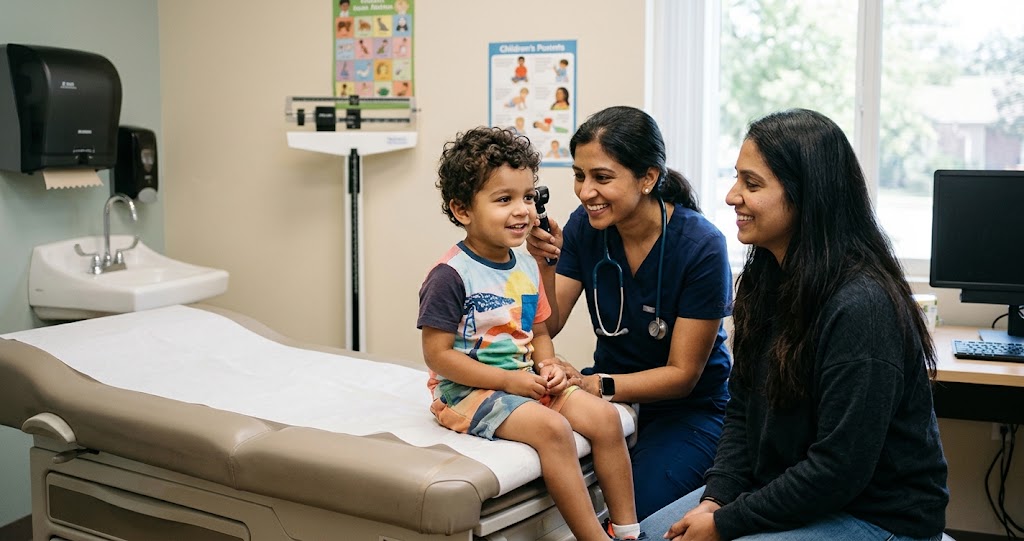
Many parents wonder whether well-child visits are necessary when their child seems perfectly healthy. The answer is an emphatic yes. The purpose of preventive care is to identify potential issues before they become problems — and many childhood conditions are asymptomatic in their early stages.
Well-child visits detect growth abnormalities, developmental delays, vision and hearing problems, heart murmurs, anemia, lead exposure and other conditions that may not produce obvious symptoms. Early detection leads to earlier treatment and better outcomes.
These visits also ensure your child stays on schedule with vaccinations, which protect them from serious diseases and are required for school enrollment in Illinois.
Perhaps most importantly, well-child visits build a relationship between your family and your pediatrician. This ongoing relationship means your doctor knows your child’s history, temperament and family dynamics — context that improves the quality of care during both routine visits and acute illness.
Schedule your child’s next well-child visit at Zalam Pediatrics.
Visit us at 9830 S. Ridgeland Ave., Suite 2, Chicago Ridge, IL 60415.
📞 (708) 599-8000Key Takeaways
✔ The AAP recommends about 12 well-child visits in the first 3 years
✔ Annual visits continue from age 3 through 18
✔ Preventive visits are covered without copay under most insurance plans
✔ Autism screening is recommended at the 18-month and 24-month visits
✔ Bring a list of questions to maximize your appointment time
✔ Missed visits can be rescheduled — call your pediatrician promptly
Ready to choose your baby’s pediatrician?
Visit Zalam Pediatrics Center at 9830 S. Ridgeland Ave., Suite 2, Chicago Ridge, IL 60415.
📞 Call (708) 599-8000 to Contact UsFrequently Asked Questions
How often should my child see a pediatrician?
The AAP recommends seven well-child visits in the first year, visits at 15, 18, 24 and 30 months and annual visits from age 3 through 21. Additional visits are needed for sick care, injuries and specific health concerns.
What is the difference between a well-child visit and a sick visit?
A well-child visit is a scheduled, preventive appointment focused on monitoring growth, development and overall health when your child is not sick. A sick visit is an appointment to diagnose and treat a specific illness or injury. Both are important parts of pediatric care.
Are well-child visits covered by insurance?
Yes. Under the Affordable Care Act, most insurance plans cover well-child visits and recommended preventive services at no out-of-pocket cost. This includes Medicaid and CHIP for eligible children.
What should I bring to a well-child visit?
Bring your insurance card, your child’s immunization records, a list of medications and supplements, any school or camp forms that need completion and a list of questions or concerns you want to discuss with the pediatrician.
What if my child is behind on well-child visits?
It is never too late to get back on track. Schedule a visit with your pediatrician, who can assess your child’s current health status, administer any catch-up vaccinations and create a plan to resume the recommended schedule.
Conclusion
Well-child visits are the foundation of your child’s preventive healthcare. By following the recommended schedule, you ensure that your child’s growth and development are monitored, vaccinations are up to date and potential health concerns are identified early.
Your pediatrician is your partner in your child’s health journey — and well-child visits are how that partnership does its most important work.