
Introduction
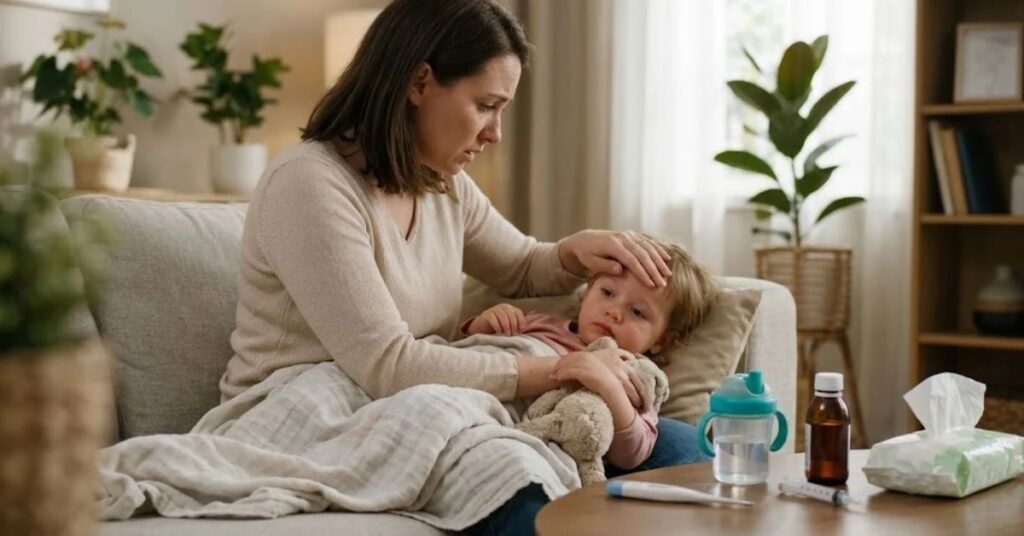
Few things cause more parental anxiety than a feverish toddler. When your child’s forehead feels hot and the thermometer confirms a fever, it is natural to worry about the cause, the severity and what you should do. Understanding what a fever actually is, how to manage it safely and when it truly requires medical attention can help you respond calmly and effectively.
A fever is defined as a body temperature of 100.4 degrees Fahrenheit (38 degrees Celsius) or higher. It is not a disease itself — it is a symptom and in most cases, it is a sign that your child’s immune system is actively fighting an infection. Fever is one of the body’s most effective defense mechanisms.
This guide covers everything parents need to know about toddler fevers — from accurate temperature measurement and safe fever-reducing strategies to the specific warning signs that indicate a fever needs immediate medical attention.
Need to Schedule a Pediatric Visit?
Whether your child needs a well-child checkup, vaccinations, a sick visit, or a school or sports physical, our caring team at Zalam Pediatrics Center in Chicago Ridge is here to help.
Toddler Fever Temperature Guide
| Temperature | Severity | Recommended Action |
| 98.6°F (37°C) | Normal | No action needed |
| 99-100.3°F | Low-grade | Monitor, offer fluids, dress lightly |
| 100.4-102°F | Mild fever | Acetaminophen or ibuprofen if uncomfortable |
| 102-104°F | Moderate fever | Medicate and call pediatrician |
| Above 104°F | High fever | Seek medical attention promptly |
| Above 105°F | Emergency | Go to ER immediately |
Understanding Fever in Toddlers
Normal body temperature varies throughout the day and from child to child. A temperature of 98.6 degrees Fahrenheit is commonly cited as “normal,” but actual normal temperature can range from about 97 to 100 degrees Fahrenheit depending on the time of day, activity level and where the temperature is measured.
A true fever is 100.4 degrees Fahrenheit or higher, measured rectally (the most accurate method for young children). Temperatures taken under the arm (axillary) tend to read about one degree lower than rectal temperatures and temporal (forehead) and tympanic (ear) readings vary in accuracy.
Why Do Toddlers Get Fevers?
The most common cause of fever in toddlers is viral infection — colds, flu, stomach bugs and other common childhood illnesses. Bacterial infections (ear infections, strep throat, urinary tract infections) also cause fever. Other causes include teething (may cause a very slight temperature elevation but not a true fever above 100.4), vaccination reactions (mild fever is a normal response) and overdressing or overheating.
Fever itself is not harmful in the vast majority of cases. It is part of the body’s immune response and actually helps fight infection. The height of the fever does not necessarily indicate the severity of the illness — a child with a mild cold may spike a high fever, while a child with a serious bacterial infection may have only a low-grade temperature.
How to Take Your Toddler’s Temperature
Accurate temperature measurement is essential for determining whether your child has a fever and for communicating effectively with your pediatrician.
Recommended Methods by Age
For children under three years old, a rectal temperature is the most accurate method. Use a digital thermometer with a flexible tip, apply petroleum jelly to the tip, insert it gently about half an inch into the rectum and hold it in place until the thermometer beeps.
Temporal artery (forehead) thermometers are convenient and non-invasive, making them popular with parents. While not as precise as rectal readings, they provide a reasonable estimate for routine monitoring.
Tympanic (ear) thermometers are quick but can be less reliable in young children due to small ear canals. They are more appropriate for children over six months.
Always tell your pediatrician where you took the temperature and the exact reading, as this helps them interpret the result accurately.
When to Treat a Fever
Not every fever needs to be treated with medication. The primary reason to treat a fever is to make your child more comfortable, not to bring the temperature to a specific number.
If your toddler has a fever but is otherwise acting normally — playing, drinking fluids and sleeping reasonably well — treatment may not be necessary. Many pediatricians recommend treating based on your child’s comfort level rather than the number on the thermometer.
Treat the fever when your child is uncomfortable, irritable, not drinking well or having difficulty sleeping due to the fever. The goal of treatment is to reduce discomfort, not to normalize the temperature.
Safe Fever-Reducing Medications
Acetaminophen (Tylenol)
Acetaminophen is safe for children six months and older (and can be used in younger infants on your pediatrician’s recommendation). Dose based on your child’s weight, not age, using the measuring device provided with the medication. Acetaminophen can be given every four to six hours as needed but should not exceed five doses in 24 hours.
Ibuprofen (Advil, Motrin)
Ibuprofen is approved for children six months and older. It provides longer-lasting fever reduction than acetaminophen (six to eight hours per dose). Dose based on weight and give every six to eight hours as needed. Do not give ibuprofen to a dehydrated child or a child with vomiting, as it can affect the kidneys.
Important Medication Safety
Never give aspirin to children under 18 due to the risk of Reye syndrome, a rare but serious condition. Always use weight-based dosing — not age-based — and use the measuring device included with the medication, not a kitchen spoon. Do not alternate between acetaminophen and ibuprofen unless specifically instructed by your pediatrician, as this increases the risk of dosing errors.
📞 Not sure if your toddler’s fever needs treatment?
Get professional guidance right away. Our team at Zalam Pediatrics is here to help you make the best decision for your child’s health.
📞 Not sure if your toddler’s fever needs treatment? Call Zalam Pediatrics at (708) 599-8000 for guidance.
Home Care for a Feverish Toddler
In addition to fever-reducing medication when appropriate, these home care measures can help your child feel more comfortable.
Keep your child hydrated. Fever increases fluid loss, so offer frequent small sips of water, breast milk, formula or an oral rehydration solution. Popsicles and cold fruit can also help with hydration and comfort.
Dress your child in lightweight clothing. Avoid bundling a feverish child in blankets, which can trap heat and raise the temperature further. A single layer of comfortable clothing and a light blanket for sleep are appropriate.
Keep the room at a comfortable temperature — not too warm and not too cold. A slightly cool room (68 to 72 degrees Fahrenheit) is ideal.
Encourage rest. Fever is tiring and your child’s body needs energy to fight the underlying infection. Allow extra naps and quiet activities.
Do not use cold baths, ice packs or rubbing alcohol to reduce fever. These methods can cause shivering, which actually raises core body temperature and rubbing alcohol can be absorbed through the skin and is dangerous for children. A lukewarm (not cold) sponge bath may provide comfort if your child tolerates it.
Febrile Seizures
Febrile seizures are convulsions triggered by fever, occurring in approximately two to five percent of children between six months and five years of age. While terrifying to witness, febrile seizures are generally harmless and do not cause brain damage, epilepsy or long-term complications.
During a febrile seizure, your child may lose consciousness, stiffen, shake or jerk their arms and legs, roll their eyes and be unresponsive for a brief period. Most febrile seizures last less than five minutes.
If your child has a febrile seizure, place them on their side on a safe surface, do not put anything in their mouth, do not try to restrain them, time the seizure and call your pediatrician after the seizure ends. If the seizure lasts longer than five minutes, call 911.
A child who has had one febrile seizure has about a 30 percent chance of having another one with a future fever. Discuss this with your pediatrician so you have a plan in place.
When to Call Your Pediatrician
Call your pediatrician if your toddler has a fever of 104 degrees Fahrenheit or higher, if the fever lasts more than three days, if your child is not drinking fluids and shows signs of dehydration, if the fever is accompanied by a stiff neck, severe headache, persistent vomiting, difficulty breathing, a rash that does not blanch when pressed or extreme lethargy or irritability that does not improve when the fever comes down.
Trust your instincts. If something about your child seems wrong — even if you cannot identify a specific symptom — call your pediatrician. Parents who know their child’s normal behavior are often the first to detect when something is truly off.
When to Go to the Emergency Room
Seek emergency care if your child has a seizure lasting more than five minutes, is unresponsive or extremely difficult to wake, has difficulty breathing, has a purple or dark rash that does not fade when you press on it or has a fever after being left in a hot car.
📞 Worried about your toddler’s fever?
Zalam Pediatrics is here to help. Don’t panic—our expert pediatricians are ready to provide the best care for your child.
📍 Visit Us: 9830 S. Ridgeland Ave., Suite 2, Chicago Ridge, IL 60415.
📞 Worried about your toddler’s fever? Zalam Pediatrics is here to help. Call (708) 599-8000 or visit 9830 S. Ridgeland Ave., Suite 2, Chicago Ridge, IL 60415.
Key Takeaways
✔ A rectal temperature of 100.4°F or higher is a fever in toddlers
✔ Fever is the body’s natural immune response — not always dangerous
✔ Acetaminophen and ibuprofen are safe when dosed by weight
✔ Never give aspirin to children — it can cause Reye syndrome
✔ Teething does not cause true fevers above 100.4°F
✔ Seek emergency care for fevers above 104°F or with concerning symptoms
Ready to choose your baby’s pediatrician?
Visit Zalam Pediatrics Center at 9830 S. Ridgeland Ave., Suite 2, Chicago Ridge, IL 60415.
📞 Call (708) 599-8000 to Contact UsFrequently Asked Questions
What is considered a fever in a toddler?
A fever is a rectal temperature of 100.4 degrees Fahrenheit (38 degrees Celsius) or higher. Temperatures measured under the arm or on the forehead may read slightly lower than the actual core body temperature.
Should I let a fever run its course?
A fever is part of the body’s natural immune response and helps fight infection. If your toddler is comfortable, drinking fluids and behaving relatively normally, it is reasonable to monitor the fever without giving medication. Treat with fever reducers when your child is uncomfortable or not drinking well.
Can teething cause a high fever?
Teething may cause a very slight temperature elevation (up to about 100 degrees Fahrenheit) but does not cause a true fever of 100.4 or higher. If your teething toddler has a high fever, another cause — such as a viral or bacterial infection — is likely responsible.
How long should a toddler fever last?
Most viral fevers last two to three days, though some may persist for up to five days. A fever lasting more than three days or one that goes away and then returns, should be evaluated by your pediatrician.
Conclusion
Fever in toddlers is common, usually caused by viral infections and rarely dangerous. Understanding how to measure temperature accurately, when to treat and which warning signs require medical attention empowers you to manage fevers at home with confidence.
When in doubt, call your pediatrician. It is always better to ask a question and get reassurance than to worry in silence.